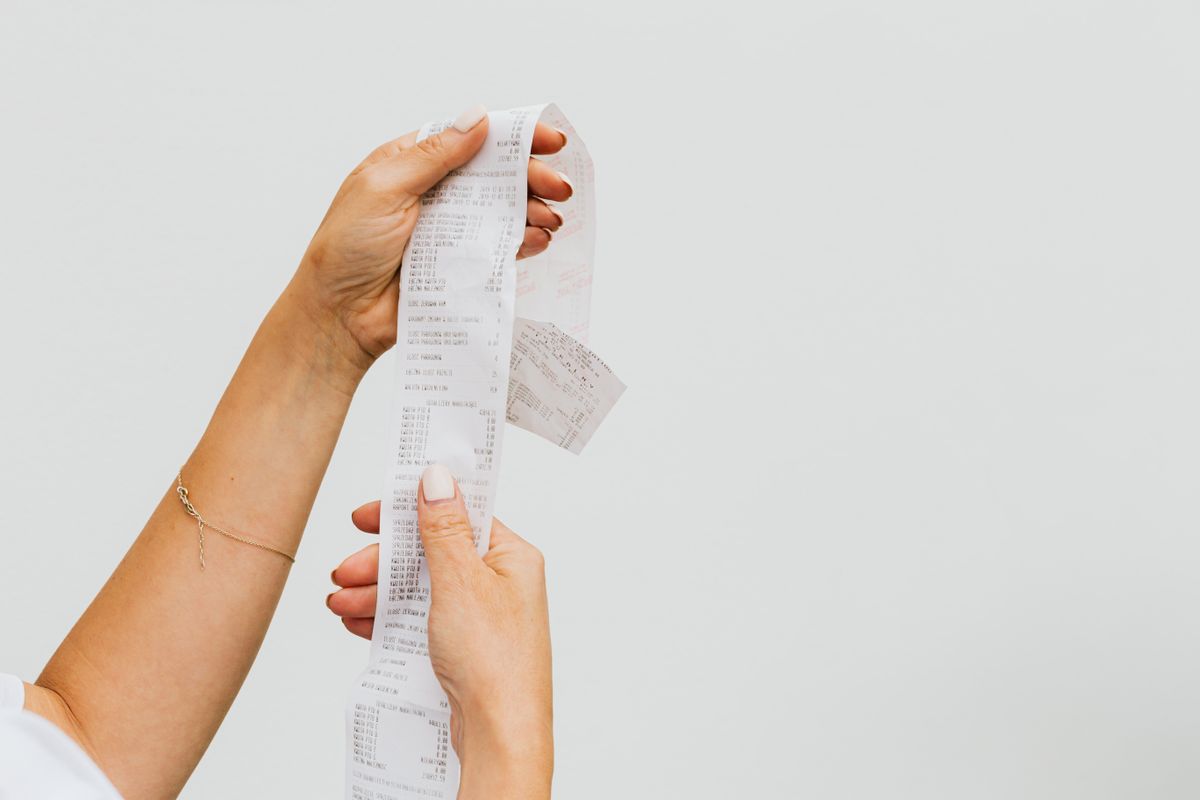
Receipts tend to disappear into the same pile as shopping lists, envelopes, and flyers. Giving them a small separate place makes two decisions easier: whether the record is still needed and how the paper should eventually be discarded. Those are different questions, and neither needs to be answered by keeping every receipt forever.
Identify thermal paper before recycling
Many receipts use thermal paper rather than ordinary printed paper. Check your local recycling instructions for receipts or thermal paper specifically. Keep uncertain receipts out of the regular paper stream until the provider confirms their route. A recycling symbol on a nearby shopping bag does not describe the slip placed inside it.
Do not use unwanted thermal receipts as packing material mixed with clean paper or as a liner for food scraps. A small printed invoice on ordinary paper may have a different disposal route, so size alone is not a useful sorting rule. Avoid improvised chemical or heat tests to identify a receipt.
Keep a reason with the record
Save records that still have an active purpose, such as a pending return, reimbursement, or warranty inquiry. Put them in a labeled envelope or folder and add a brief note when the purpose is not obvious. This prevents a future sorting session from becoming a second investigation into every purchase.
Record-retention requirements depend on the situation. A household decluttering routine is not a substitute for tax, business, or legal requirements. Move important records into the system used for those documents instead of leaving them in the kitchen's temporary receipt collection.
Digital still needs a destination
If a retailer offers a digital receipt, consider whether the method suits you and what information it requires. Save needed files with a useful date and purchase description. An inbox full of unidentified attachments can become just as difficult to manage as a drawer of paper. Check separately whether a photograph or downloaded copy meets the purpose for which you need the record.
Review the temporary pile during a regular household task, such as checking purchases or preparing the next grocery list. Remove records whose purpose has ended and that do not need further retention. Protect personal information appropriately before disposal. The goal is a small, understandable set of documents with an actual job, while thermal receipts stay separate from ordinary paper recycling according to local instructions.