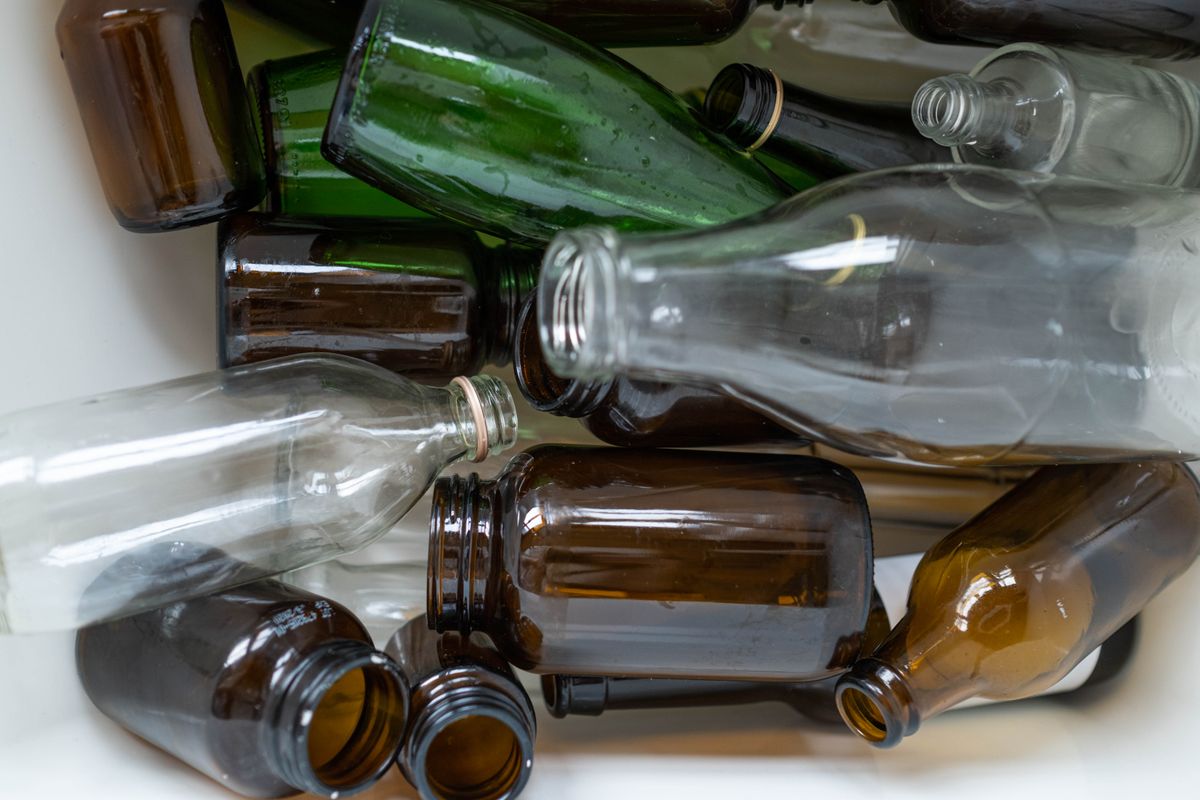
A sauce jar, a beverage bottle, and a chipped drinking glass can look like one material stream. A collection program may treat them very differently. Before making a permanent glass bin in your kitchen, find out which containers your local recycling service accepts and where it wants them delivered.
Start with the collection route
EPA guidance identifies food and beverage glass containers as recyclable, while emphasizing that local programs set their own acceptance rules. Some communities collect glass at the curb; others direct residents to a separate drop-off. Check the current city or hauler instructions rather than copying the system used in a previous home. Look specifically for rules on lids, broken glass, and whether containers should be separated by color.
If a bottle carries a deposit that can be redeemed in your state, give it a separate place. A return container beside your grocery bags makes more sense than mixing refundable bottles with jars destined for another facility. Keep a photograph or short note of the relevant instructions if several people share the kitchen.
Choose a container you can actually carry
A large collection tub can become too heavy before it looks full. Try a smaller, sturdy container with comfortable handles and space to set it down safely. You do not need a matching set of bins: a sound box or washable crate can serve the purpose. Avoid a flimsy paper bag for heavy bottles, and keep the collection away from edges, children, and busy doorways.
Make emptying part of clearing the table. Follow your provider's preparation instructions, keeping food and liquid out of the collection. Do not spend time peeling every paper label unless your program asks for it. A simple routine is more likely to survive a busy week than an elaborate washing and sorting station.
Damaged glass needs a separate decision. EPA advises against putting broken glass into a recycling bin because it can injure workers and interfere with equipment. Ask your local service how to contain and dispose of it safely. Do not reach into a collection tub to retrieve loose shards, and do not hide them among intact containers.
Make the trip predictable
Set a practical trigger for drop-off, such as one full carry crate, rather than waiting for a pile to become inconvenient. Check the facility's hours before leaving and combine the visit with a nearby errand when possible. Keep reusable transport bags and boxes with you after unloading.
Review the arrangement after a few weeks. If jars continually accumulate on the counter, the collection container may be too far from where they are emptied. If transport is the difficulty, a smaller load or a different drop-off schedule may solve it. The aim is a dependable route for the glass your household already uses, with fewer decisions each time a container becomes empty.