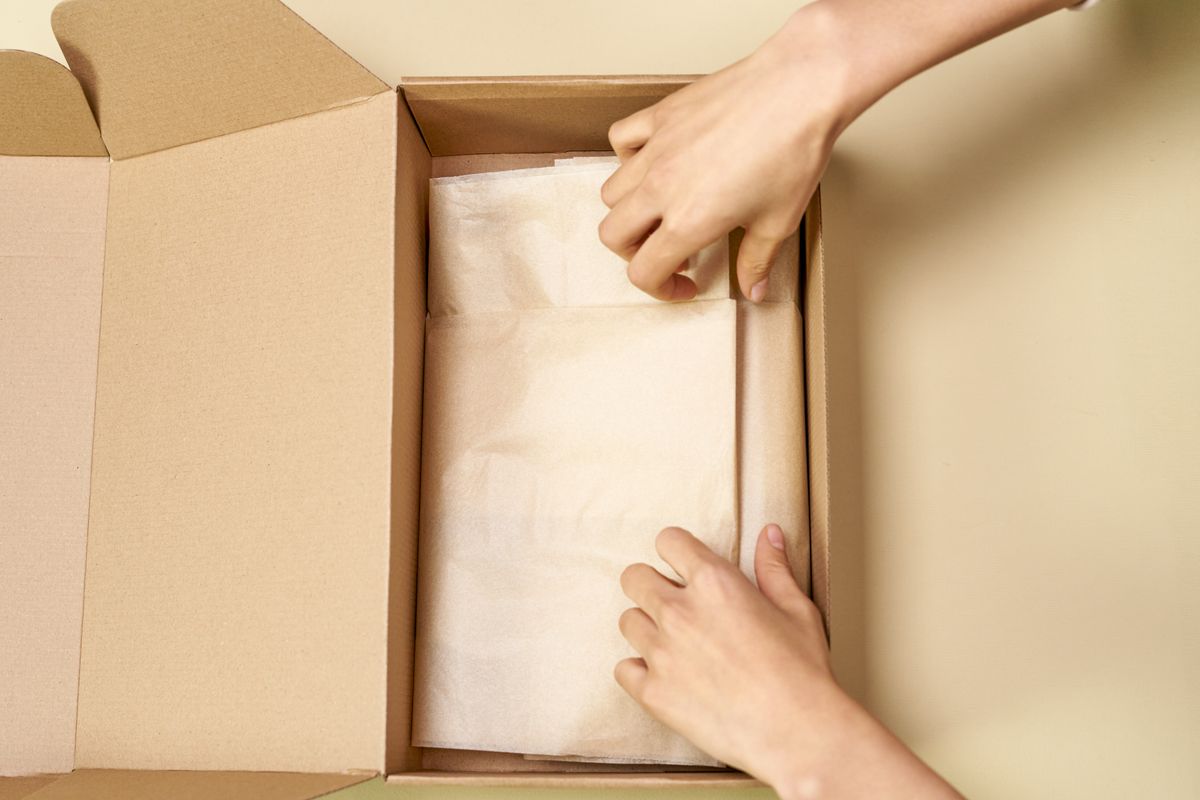
Brown packing material is not always plain paper. Some packaging has an added film, coating, or other layer even when the visible surface looks familiar. Before putting an entire box's contents into paper recycling, look at the material information and separate loose inserts.
Observe without guessing
Check edges for a distinct film layer and read any disposal instructions. A glossy surface can be a reason to investigate, but it is not a complete material test. Do not use heat, burning, or chemicals to identify an unknown package. Your collection provider can advise when the label and construction do not give a clear answer.
Keep loose plastic film, foam, and other cushioning separate from paper. Pressing everything into one tight ball makes the materials harder to recognize later. Paper with significant food or other contamination also needs its own decision under local guidance. Do not assume that all products with paper in their name belong in the same bin.
Wrinkles can still be useful
Clean, dry paper does not need to be restored to a perfectly flat sheet before it can serve another job. A crumpled sheet may be suitable cushioning when the item and journey call for it. Keep a few larger pieces folded in a shallow space rather than collecting countless fragments that scatter whenever the cupboard opens.
Size the reserve to the shipments you actually make. Someone who rarely sends parcels does not need a large packing-paper store. A fixed shelf or folder makes the limit visible. When better sheets arrive, replace damaged ones rather than continuing to expand the supply.
Prepare it for another trip
Remove personal addresses or notes before giving packaging to another person. Check for odors, moisture, and dirt. Keep stored material away from wet floors and exposed food. Packing paper is only one part of a shipping system; fragile glass or equipment still needs protection appropriate to its shape, weight, and transport conditions.
Choose an actual upcoming use for the material you keep. Set aside sheets for a gift shipment or a confirmed secondhand sale, then return the rest to the normal collection route if accepted locally. If the reserve remains untouched for months, reduce it.
A useful supply is easy to find, clean enough for its purpose, and small enough to manage. Saving every fragment can make the next packing job more difficult while taking room from the materials that would actually help.