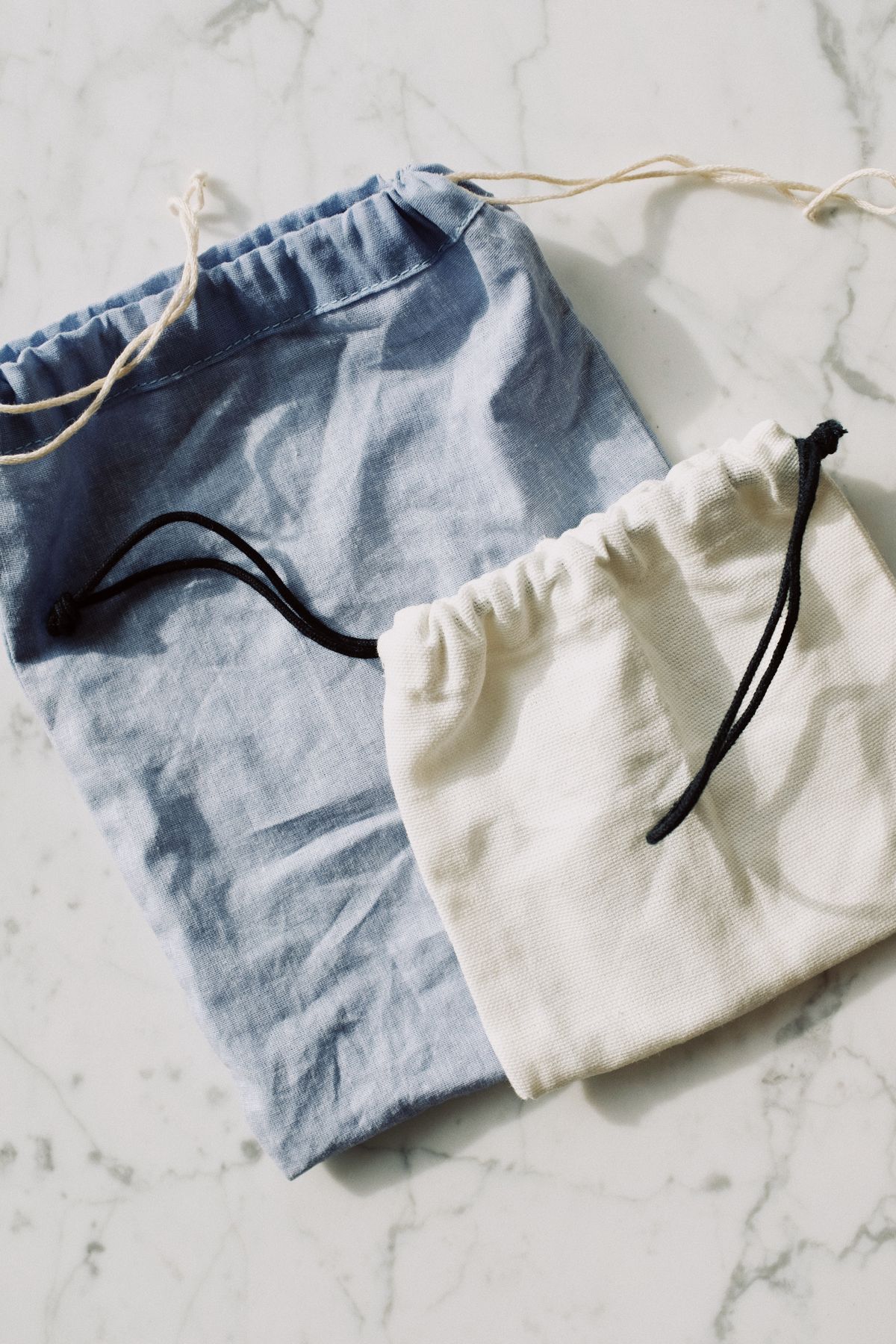
Washable bags accumulate through shopping, gifts, and past projects. Before adding more, spread out the ones already available and sort them by size, material, and condition. Every bag does not need to do everything. A recognizable purpose makes it easier to use and maintain.
Match the job to the construction
A small fabric pouch can organize dry travel items. A purpose-made laundry mesh bag may protect certain items in an appropriate wash cycle. A produce bag needs different properties from a bag carrying dirty shoes. Choose by suitability rather than simply by what fits through the opening.
Inspect seams, closures, and coatings. Long loose cords may be inconvenient for some tasks, while damaged zipper pulls or sharp components should not sit against delicate surfaces. An ordinary drawstring bag is not automatically suitable for a washing machine. Its material and closure must be intended for that use.
Keep food-contact roles separate from dirty household tasks. A bag used for workshop supplies or cleaning products should not quietly return to carrying fruit. A continuing assignment prevents that confusion. Similar bags can be distinguished by a clear label or a consistent storage location.
Keep the working collection small
Place frequently used bags within easy reach. Spares can lie flat in a limited storage area. If several bags serve the same rare purpose, keeping every one may be unnecessary. Offer sound extras to someone who wants them instead of nesting them indefinitely inside other bags.
After use, inspect the interior and remove loose residue. Follow the material's care instructions when washing. Let damp bags dry completely before folding or closing them. Corners, thick seams, and layered sections may remain wet even when the outer surface feels dry.
A simple torn seam may be repairable. Afterward, assess whether the bag is sufficiently sound for its assigned task. A repair suitable for light cabinet organization does not establish that the bag can carry heavy groceries. If the original role cannot be restored, change the assignment deliberately or determine appropriate disposal.
The most useful bag system does not need a long inventory. When picking one up, you should be able to identify its purpose, whether it is clean, and where it returns after use. Those three pieces of information turn an existing pile of textiles into usable household equipment.