Before buying another roll of gift wrap, look through the boxes and paper already available. A clean shipping box, a sound piece of previously used wrapping, or a plain paper sheet may fit the job. The aim is appropriate protection and a thoughtful presentation, not a requirement that every surface look brand new.
Place the gift on the material and check coverage before cutting. A piece that is too small can lead to several extra layers. Delicate items need suitable protection first; an attractive outer sheet does not automatically cushion them. Avoid dirty packaging or materials with unidentified residue.
Use simple folds and limited fastenings
An existing box can make an irregular shape easier to wrap. Add padding only to the extent the contents require. A small item may suit a small box better than a large package filled with loose material. Remove or cover previous address labels and personal details without assuming the whole box needs another outer layer.
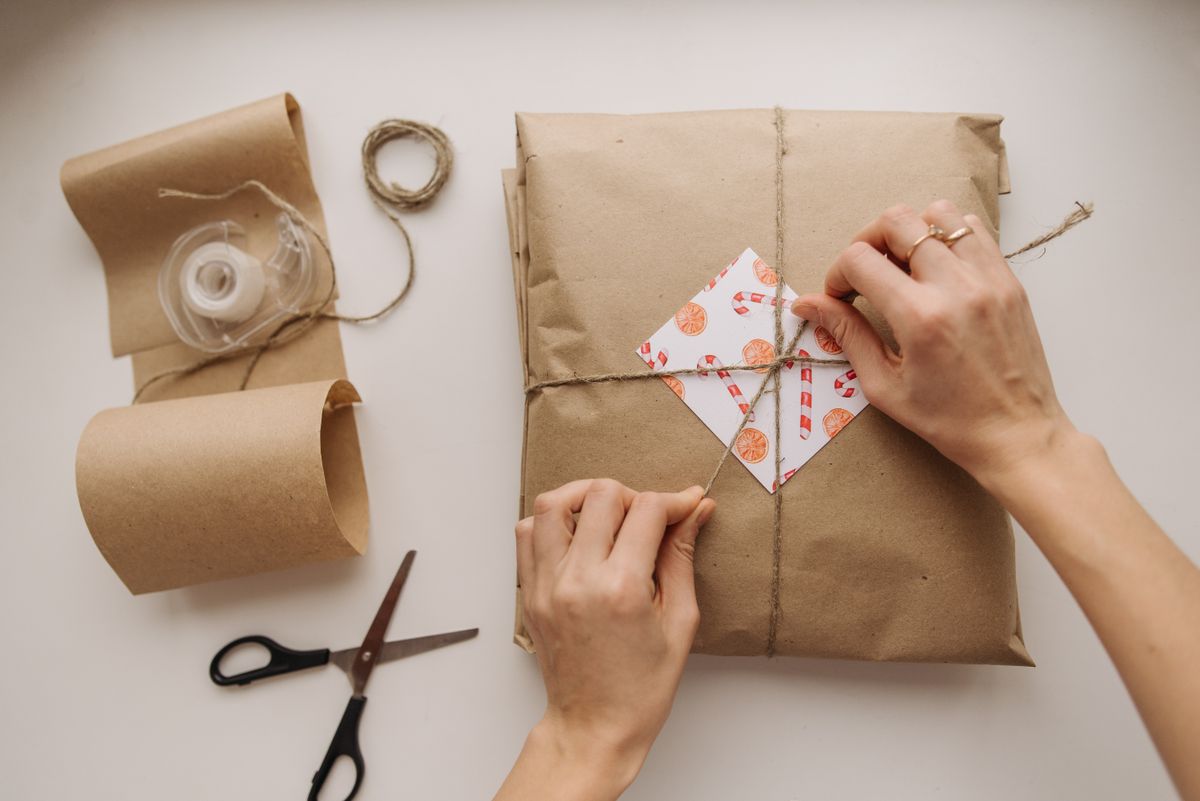
Fold the paper so its edges hold position before applying tape. Then use only the fastening points needed. Existing ribbon can hold paper closed and be used again, provided it is clean, sound, and easy to untie. Glitter, foil, and heavy glue are not necessary to make the parcel feel personal.
A tag cut from a suitable scrap can carry the name. If the wrapping sheet could be reused, avoid writing across its entire surface. A short handwritten note or separate card gives the gift a personal connection without requiring a collection of decorative accessories.
Give the wrapping a realistic next destination
Offer to take back usable ribbons or boxes if the recipient does not want them. Reuse should not become an unspoken obligation for someone else to store packaging indefinitely. Dispose of damaged or dirty remnants according to local instructions; decorative wrapping is not automatically acceptable in paper recycling.
Keep only a manageable amount of genuinely usable material. Flattened boxes and larger paper pieces are easier to locate than a bin packed with tiny scraps. A limited, designated space encourages you to check existing supplies before the next occasion. That makes using what is on hand a repeatable habit rather than another storage problem waiting in a closet.