A stack of used plant pots becomes a useful reserve only when you can identify, reach, and use the containers. Old labels and packed soil can hide cracks or make it difficult to see which sizes you already own. Start with a manageable selection rather than trying to rescue every pot accumulated over several seasons.
Inspect before washing
Take pots out one at a time and check the rim, base, and drainage openings. Assess sharp breaks, severe distortion, and uncertain material damage before cleaning. Washing does not restore a container's structural strength. Set aside pots that cannot be safely handled for the intended use.
Remove loose roots and old residues without damaging the container. Keep material from visibly diseased plants separate while deciding how it should be handled. University of Minnesota Extension explains that soil and plant debris on containers can carry plant pathogens, and that visible dirt should be removed before any necessary disinfection. A clean-looking surface and an appropriate disease-management procedure are not interchangeable.
Use a method suited to the material
Choose a suitable brush and a cleaning approach the container can tolerate. Pay attention to rough interiors, rims, and corners. When using a product, follow its label and confirm that it is appropriate for the task. Do not mix cleaning or disinfecting chemicals. For a specific plant-disease problem, obtain relevant guidance instead of assuming one homemade treatment fits every organism and material.
Rinse and dry as required by the method used. Allow space for the containers to remain clean while drying rather than putting them directly back into soil or debris. Keep prepared pots distinct from the unchecked group. Without that separation, it is easy to lose track of what has already been done.
Keep a reserve you can actually use
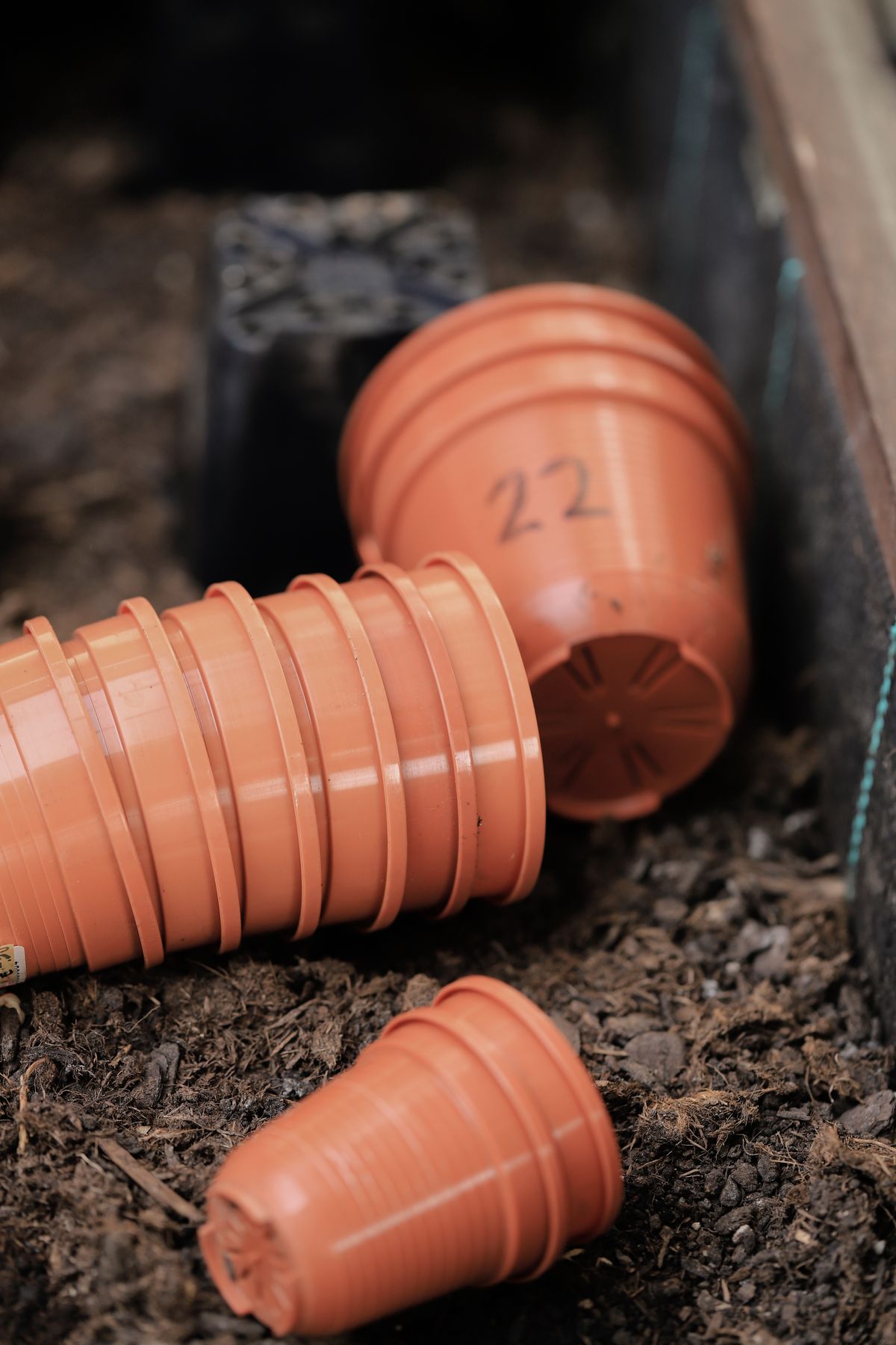
Arrange sound containers by the sizes you regularly need. Stack them so they can be separated again without stressing fragile rims. Keep matching saucers nearby or mark their relationship. Remove misleading old plant labels while retaining useful material or manufacturer information.
Check this reserve before buying more pots. If you have a surplus, offer a clear description of the sizes and condition to a willing recipient. Follow local disposal instructions for damaged containers; being made of plastic does not establish acceptance in every recycling program. A modest, accessible selection of ready-to-use pots is more helpful than a tall stack whose condition has to be investigated again each spring.