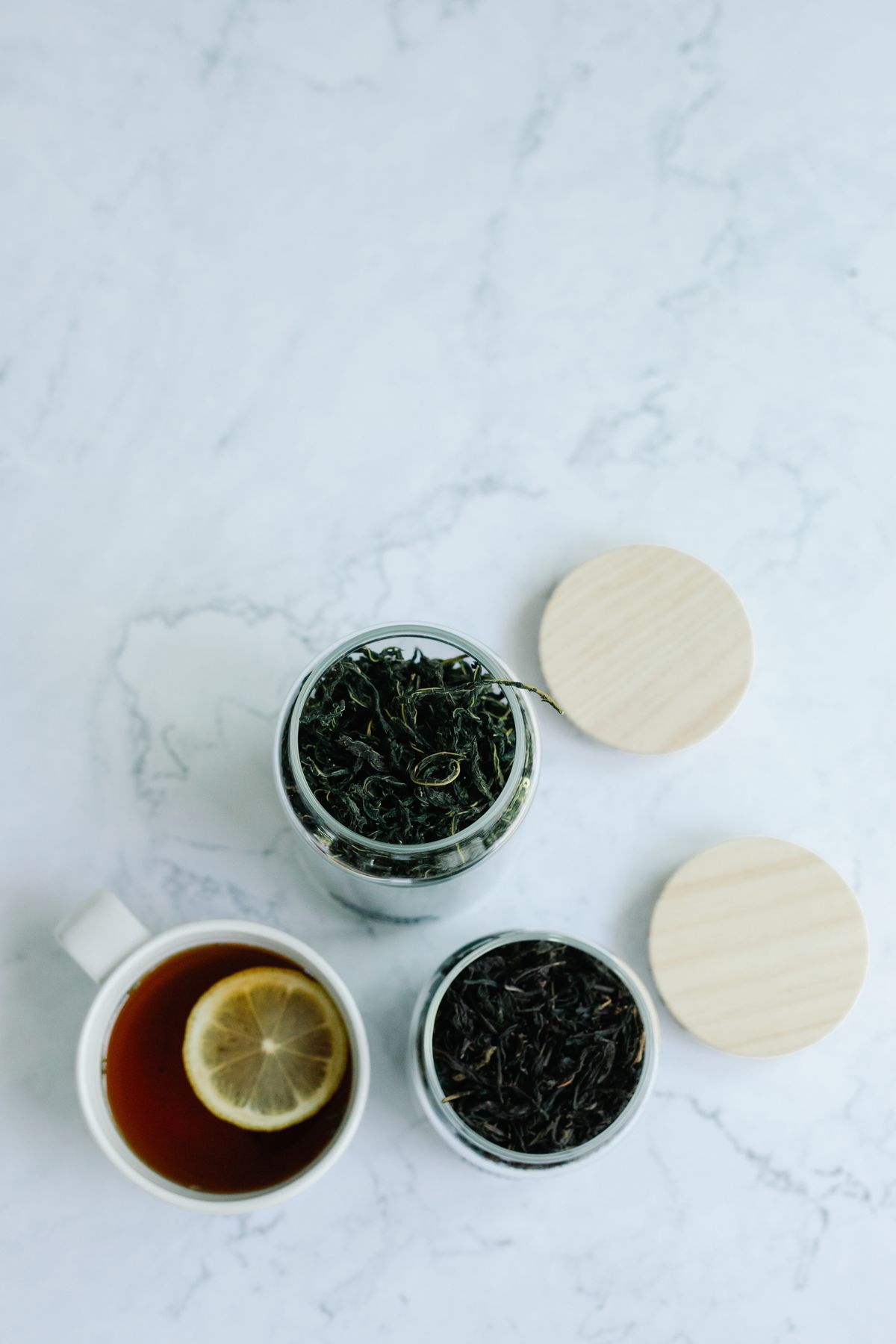
A tea tin does not necessarily tell you what is inside. After several refills, the lid may still name an old blend while the contents have changed. Before buying more containers, compare the labels with the actual supply. Color and scent are unreliable substitutes for clear identification, especially when flavored blends look similar.
Keep information as well as leaves
Retain ingredient lists, brewing directions, and date information when transferring loose tea. These details matter when several people share the supply or someone needs to avoid a particular ingredient. If you cut out a label, preserve the relevant information. Alternatively, keep the original packaging with the associated container until the contents are used. A handwritten name can supplement the original details without replacing them entirely.
Do not combine unrelated blends simply to empty a bag. A small remainder can stay in its current suitable packaging and be used separately. Once several blends are mixed, their ingredients and preparation instructions become harder to identify. Filling every tin to the top is not a useful measure of successful storage.
Arrange the space around preparation
Follow the product storage directions and choose clean, dry containers with effective closures. Avoid placing open tea directly above the kettle, where steam can reach it during preparation. A convenient shelf still needs to suit the conditions that occur while you make a drink. Keep a dry scoop or another suitable utensil nearby so taking out a portion is straightforward.
Put frequently used varieties within easy reach. Less common blends can sit farther back, provided you can still identify them. Front labels work well on a low shelf; lid labels may be easier to read in a drawer. Choose the label position from the direction you normally look into the storage area, not from how the arrangement looks in a photograph.
Separate sampling from stocking up
Before shopping, list the varieties that actually need refilling. A small sample may be a better way to try an unfamiliar blend than a large bag. For gift tea, check whether anyone in the household wants it before opening it. An appropriate unopened package with its information intact can be offered to a willing recipient rather than opened out of obligation and forgotten.
At the next tidy-up, address the specific difficulty: unreadable labels, inaccessible containers, or too many open blends. There is no need to replace the whole arrangement. A tea area works when someone can find the intended blend, understand what it contains, and prepare it without opening every tin in the cupboard.