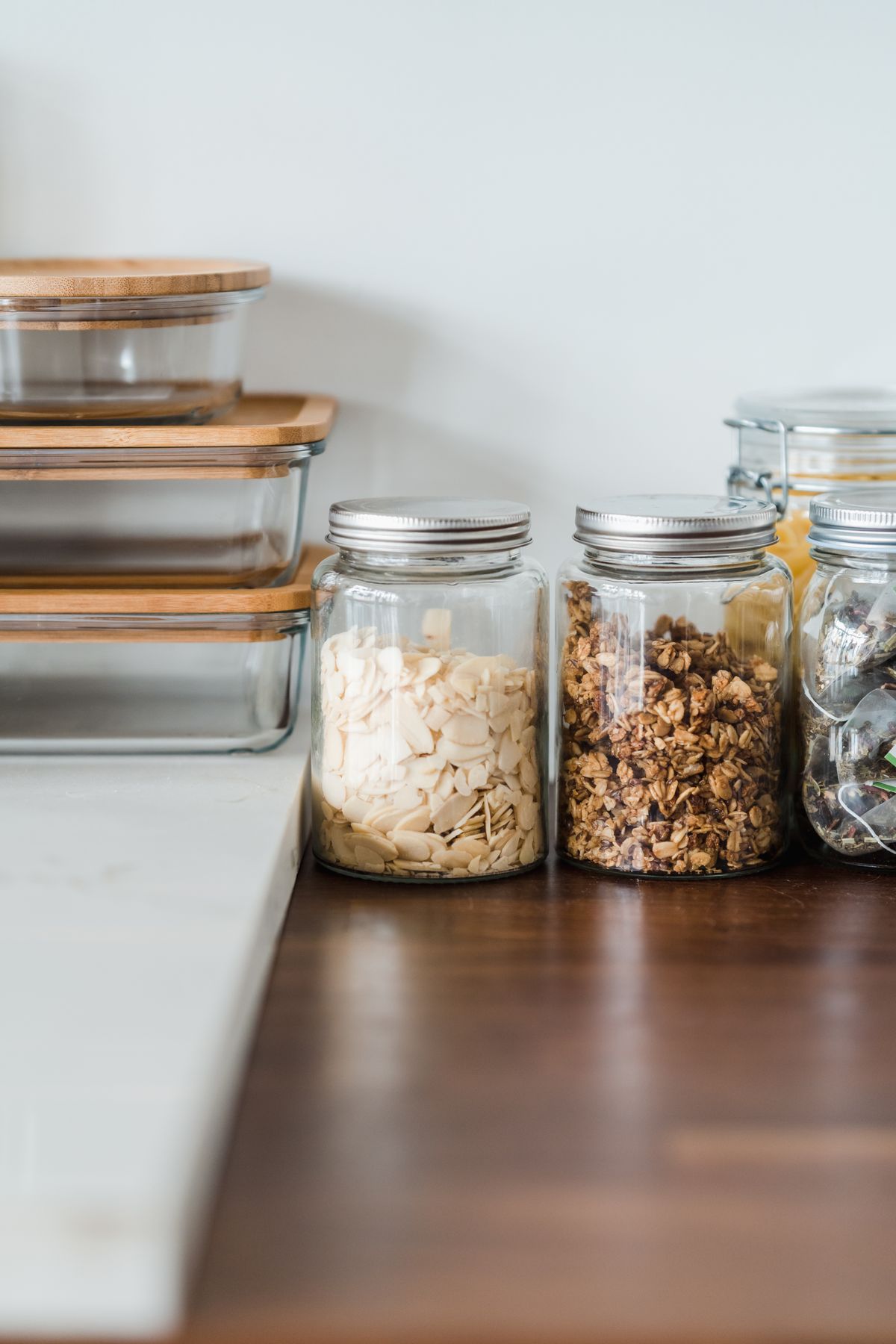
Pantry jars can make ingredients easier to see, but they can also make important information disappear when the original package is discarded. Before decanting, identify the job the jar will do: easier measuring, a suitable closure, or a storage shape that works better on the shelf.
Move the information with the food
Retain the product name, relevant ingredients and allergens, date information, and preparation directions. Batch details can matter if a product is recalled. A clearly associated photograph or a clean saved section of the original label may help. Make sure it belongs to this supply rather than a similar package purchased previously.
Label the jar before filling it. Similar grains, flours, and powders may be difficult to identify later. Use a container suitable for food storage whose condition and previous use are known. It should be clean and completely dry before the ingredient is added.
Choose a capacity that fits the purchase
Check whether the usual package amount will fit. A jar that always leaves a partly empty retail bag beside it has created two storage locations rather than one. A larger container may be appropriate if it fits the shelf and remains comfortable to lift. Daily handling matters as much as capacity.
Do not routinely top up an old supply with new food. That can obscure dates and make it harder to assess the older contents. Plan to use the existing amount, then clean and dry the container appropriately before refilling. If two supplies need to coexist, keep them distinguishable.
For an infrequently used ingredient, leaving it in its original packaging within suitable outer storage may be simpler. The instructions stay attached and the extra decanting step disappears. Matching jars are not a requirement for an organized pantry.
Test one ingredient first
Try the arrangement with a food used regularly. Can the container be lifted securely, does the scoop fit, and is the closure easy to keep clean? Those answers reveal more than a photograph of a completely refitted shelf. Adjust the setup before buying additional containers.
If a particular ingredient is repeatedly forgotten, change its location or reduce the purchase quantity. A clear jar makes a food visible but does not create a plan to eat it. Check the pantry before shopping and connect supplies to actual meals.
A useful jar preserves both the food and the information needed to handle it. When the transfer removes dates, hides allergens, or leaves a second bag behind, keeping the original package may be the better arrangement.