Wood furniture may have lacquer, oil, wax, or another finish over the wood itself. Knowing the wood species does not automatically tell you which care product belongs on the surface. Two tables that look similar can require different treatment. Before buying furniture polish, look for the original care instructions or reliable information about the finish.
Photographs of the whole piece and any manufacturer labels help when asking for advice. Record products already applied, if you know them. A secondhand item's treatment history may be uncertain; retain that uncertainty instead of identifying a finish confidently from color alone. Sensitive, valuable, or older pieces may warrant specialist advice before you alter the surface.
Notice what causes the wear
Look at where water, heat, or abrasion regularly reaches the furniture. A damp vase base calls for a different change from a bag with rough metal feet. Appropriate pads or coasters can reduce direct contact, but they should be clean and compatible with the surface. Dirt or moisture can also accumulate beneath something intended to protect the finish.
Avoid dragging heavy objects across a tabletop. Lift them with suitable help where that can be done safely. Check the contact points beneath equipment and decorative objects occasionally. A small change in placement may prevent additional marks without requiring a new finish over the entire piece. Direct sunlight and nearby heat sources may also matter when choosing where furniture stands.
Clean with restraint
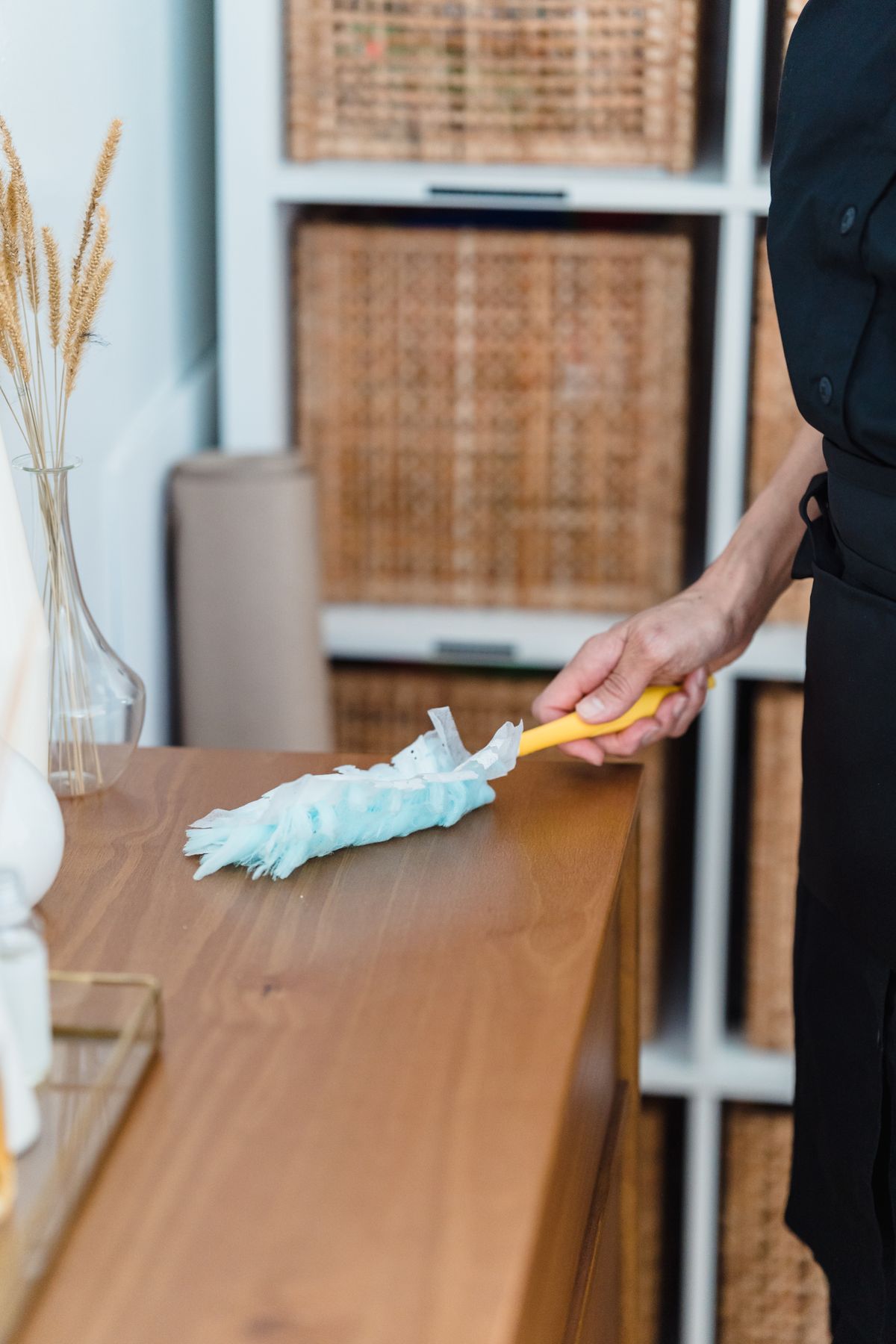
Remove loose dust with an appropriate soft cloth. Follow the manufacturer's directions for further cleaning, avoiding saturation and liquid left in joints. Do not apply an unfamiliar product across a large area. Even a test in a hidden location does not replace checking whether the product is intended for the existing finish.
Do not mix cleaners or assume oil is the answer to every dull patch. Some surfaces do not need an added oil layer. Residue from unsuitable products can complicate later maintenance or leave uneven results. If the surface is already sticky or significantly altered, an informed assessment is more useful than adding another product on top of the first one.
Separate appearance from function
A small cosmetic scratch does not necessarily justify refinishing the whole piece. Decide whether it affects use or simply remains visible. Loose joints, sharp splinters, and unstable components are different: they are functional problems that deserve appropriate repair. Photograph these areas and explain how the furniture is used when seeking help. A polished surface does not restore the strength of a damaged connection, and a comfortable level of visible wear can be compatible with a well-maintained piece.