A board game may have all its pieces somewhere in the house and still be impossible to play. The dice have moved into a craft drawer; the counters are mixed with another set. Keeping toys usable is less about buying matching bins and more about keeping the pieces needed for one activity together.
Check one set, not the whole room
Choose one game or construction set and spread it on a clear surface. Use the instructions or an accurate parts list for that exact edition. A picture on the box may show an example build rather than everything originally supplied. Write down any missing piece by type and quantity so you can search once, rather than rediscovering the same gap each weekend.
Set damaged pieces aside. Loose magnets, exposed batteries, sharp broken edges, or missing protective parts need attention before further play. Do not substitute a convenient household object where doing so could change the toy's safety. For toys being passed on, check the manufacturer and model against current recall information. CPSC provides a recall search and guidance for resellers; a toy that looks tidy can still have a safety problem.
Keep the storage close to the activity
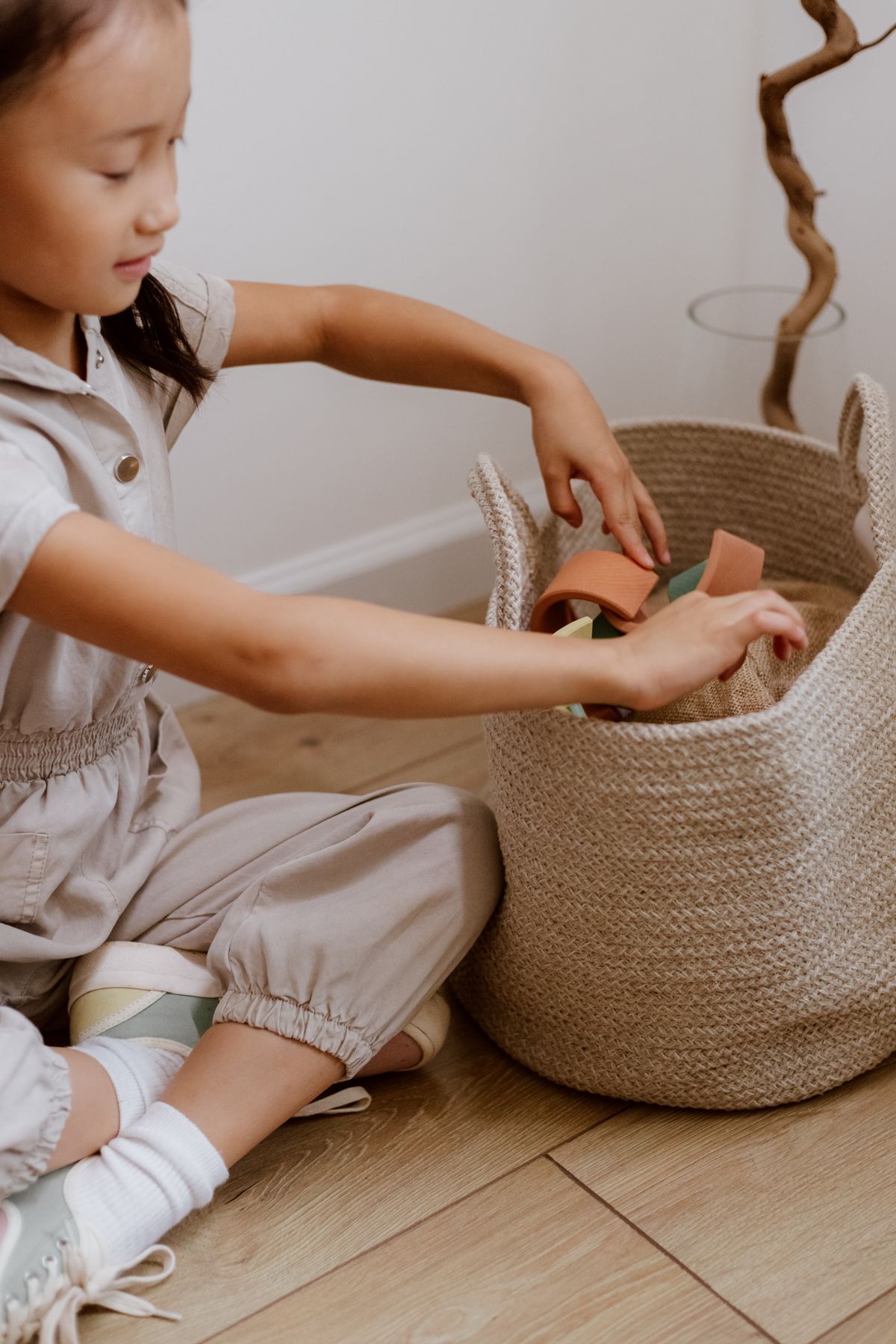
A shallow container can make frequently used blocks easier to see. The original box may remain the best choice for a board game that is played occasionally. Small internal trays are useful when they can be lifted out and put back without spilling. Avoid turning every piece into a separate sorting task that nobody will maintain.
Store the instructions with the set. If they are missing, look for the correct manufacturer's version. Preserve age guidance and safety information when replacing a damaged box. A homemade label naming the set can help a household locate it, but it does not replace the manufacturer's warnings. Keep small parts and their packaging away from younger children for whom the toy is unsuitable.
Make putting away easier
After ordinary play, check the pieces most likely to make the next session fail: dice, counters, connectors, or a special tool. This limited check may be more achievable than counting every block every day. Keep a short missing-parts note inside the box and remove an entry when the piece turns up.
Before donation or resale, do a fuller check and describe the condition accurately. Ask whether the recipient accepts incomplete sets. A box of mixed leftovers is not the same as a playable game, although clearly identified spare pieces may be useful to someone looking for them. Include the instructions and any relevant condition notes at handoff so the next household does not have to repeat your detective work.