The same abrasive sponge can be useful on one sturdy item and damaging on a delicate finish. Start with the object you plan to clean, not the strongest claim on the sponge package. Words such as multipurpose do not tell you whether a pad belongs on your coated pan, polished sink, or glass surface.
Read the object's care instructions first. If they specify a soft cloth or a nonabrasive tool, use that guidance to narrow the choice. A small test in an inconspicuous area may reveal a problem, but it does not override an application that the manufacturer explicitly rules out. Keep abrasive pads away from delicate dishes when a mix-up would be easy.
Give each tool a limited role
A dish sponge should not wander between the counter, pet-feeding area, and trash bin. Assign separate tools to different jobs. Two identical sponges in one holder are easy to confuse; a distinct color or storage position makes the arrangement clearer to everyone who uses the kitchen.
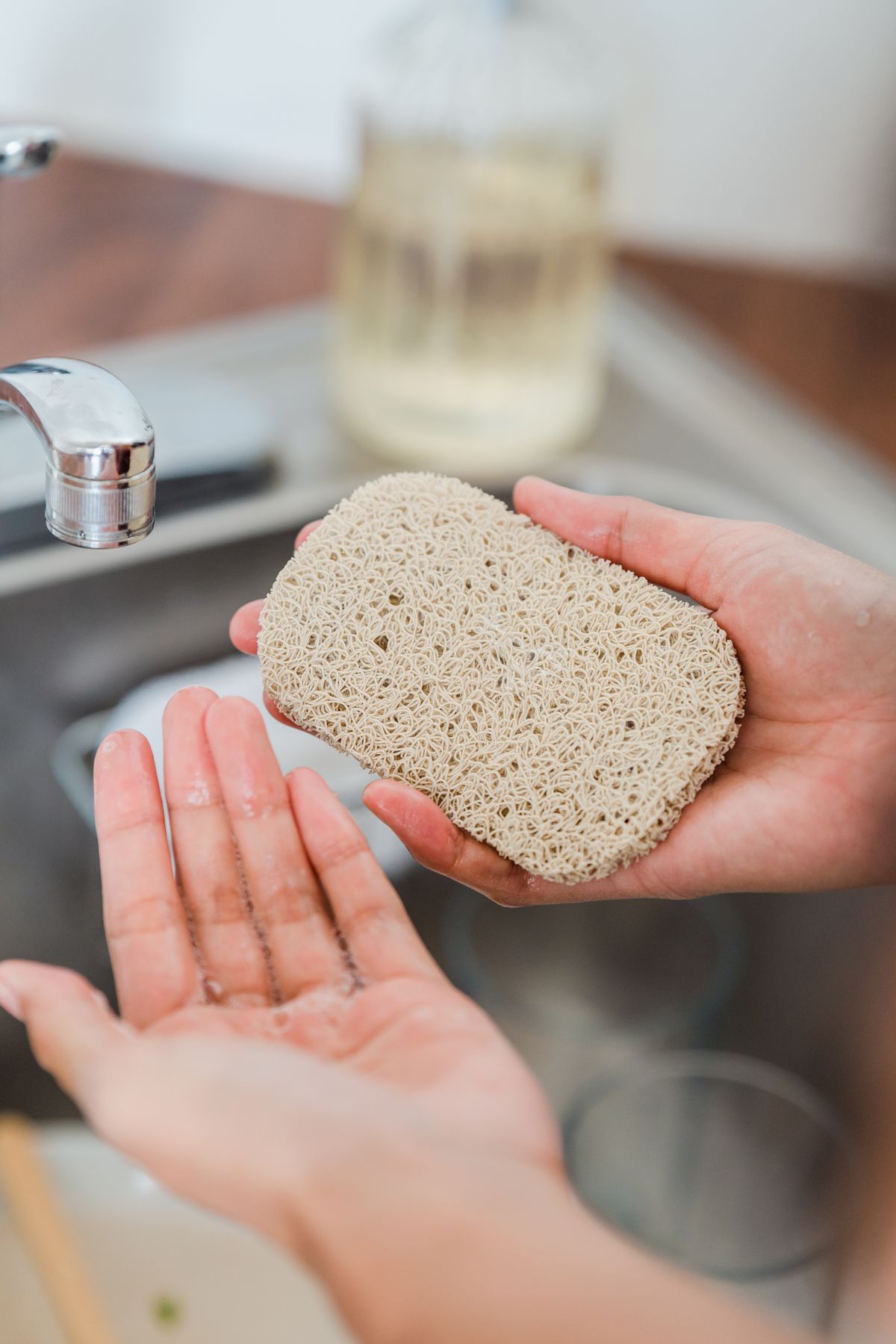
Consider size and handling as well as texture. A very thick sponge may be awkward to squeeze or difficult to fit into narrow spaces. A smaller one that sits comfortably in your hand may work better. Examine the edges of layered products and look for care instructions before buying a large multipack.
Include the after-use steps
Remove visible debris, clean the sponge as directed, and squeeze out excess water. Store it where it can drain rather than remain in a puddle. Inspect the holder underneath it; the drying arrangement is only as useful as the surface on which the sponge rests. An existing washable tray may do the job without another specialized accessory.
A pleasant fragrance does not demonstrate that a sponge is clean. Nor can scent restore material that is breaking apart. Replace a sponge that sheds, remains objectionable despite appropriate care, or can no longer be cleaned effectively. Do not assume that an improvised microwave or chemical treatment is suitable for every sponge construction.
Keep a modest supply of unused sponges dry and separate from the active one. If replacements disappear much faster than expected, look at the task allocation. A brush may be a better choice for removing larger food remnants, leaving the sponge with a narrower job. The aim is a setup you can maintain consistently, not a drawer filled with different textures whose purpose nobody remembers.