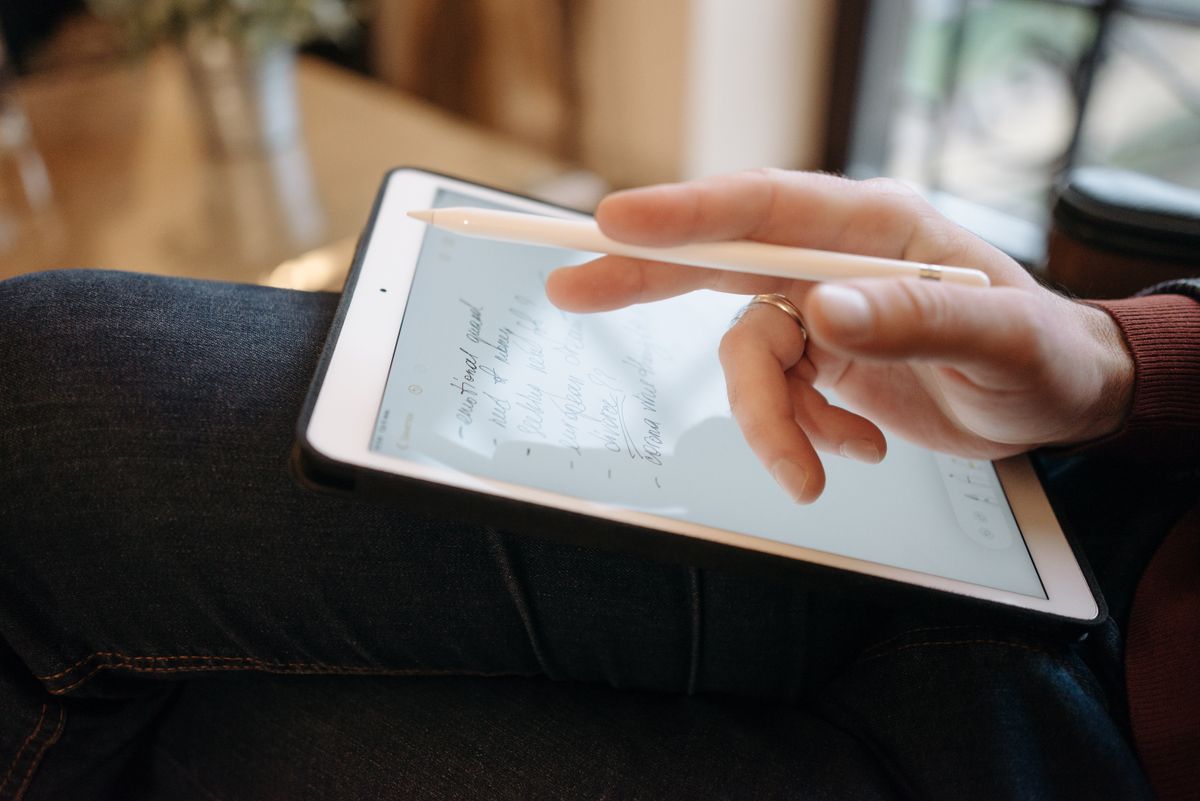
A note on the refrigerator can be more useful than one in an app nobody opens. Reducing paper does not require replacing every handwritten reminder. Start with the notes that repeatedly get copied, misplaced, or rewritten just before you need them. Those are the most promising places to simplify the routine.
Try one recurring task
A grocery list is a manageable experiment. Choose a digital location you can easily open on the way to the store. If several people shop, they need access to the same current version. Review sharing settings deliberately rather than giving someone access to unrelated private notes by accident.
Agree on when an item is removed. Is milk checked off as it goes into the cart, after checkout, or once it reaches the refrigerator? Without a shared rule, a digital list can become just as stale as a paper one. A reusable checklist can hold regular purchases while unusual items remain temporary additions.
Test the system over a few shopping trips. Check whether the list remains accessible with an unreliable connection and whether the text is comfortable to read while you are out. If using a device is inconvenient or impossible, a short paper list can still be a sensible backup.
Separate notes from records
A passing idea may need only a few words. A deadline may need an actual reminder. An important document may have separate retention requirements. Do not combine these jobs in one unstructured folder, and do not discard original records simply because you photographed them.
Give useful notes recognizable names. Bathroom replacement part, accompanied by a model photo, is easier to retrieve than another file called New note. Record only the information needed for the task. Passwords, access codes, and sensitive details should not sit in a casually shared household list.
Set a brief review point. Delete completed temporary notes, simplify recurring checklists, and remove obsolete reminders. Digital storage does not reduce searching if hundreds of unidentified entries accumulate behind the screen.
Keep paper where it works reliably: a visible message for a visitor, a sketch beside a repair job, or a reminder when no device is available. Existing spare paper can serve short-lived tasks when it does not expose confidential information. The useful measure of success is fewer unnecessary repetitions, not a total absence of paper. A modest system that everyone actually uses is more effective than a comprehensive migration abandoned after two weeks.