A drawer containing pens, rubber bands, keys, and manuals is not automatically badly organized. The problem begins when nobody knows what belongs there or where an item should return after use. Before buying dividers, give this small space a clear job.
Keep the task contained
Empty just one drawer onto a clear surface. Take a photograph first if you may need to remember which small components were together. Wipe the drawer and let it dry. Working on one bounded space makes it possible to finish without reorganizing every cupboard at the same time.
Group the contents by use: writing supplies, repair accessories, and paperwork, for example. Put unfamiliar keys or small parts in a separate review group. Not recognizing something immediately does not prove it is useless. Ask others in the household and look for identifying marks before making an irreversible decision.
Choose what should live here
Think about the drawer's location. A space near the front door may need different contents from one beside a desk. Keep frequently used items easy to reach. Move rarely used documents only when you have identified a real destination for them; shifting a pile without assigning a place simply spreads the same problem.
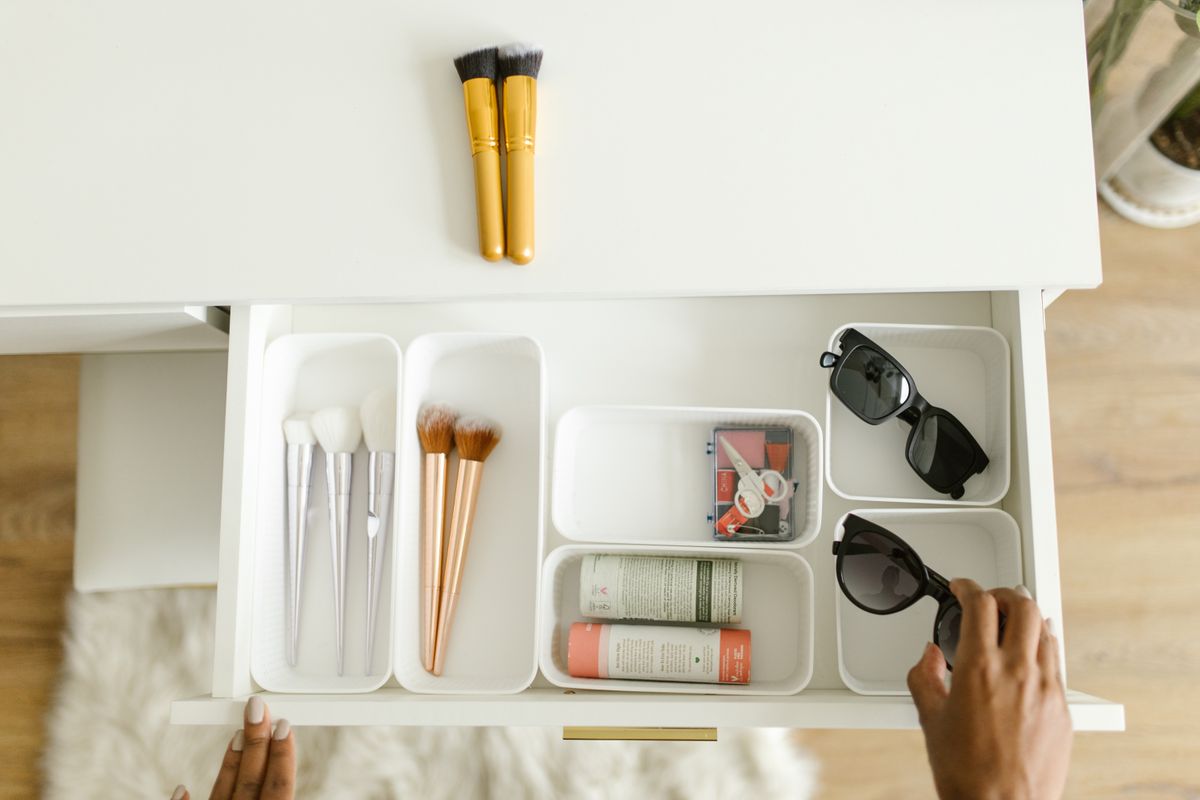
Try existing small boxes as dividers. Open and close the drawer to check whether they slide, catch, or stand too high. Leave enough room to pick something up without removing everything around it. A divider earns its place by making use easier, not by producing a neat photograph.
Finish the decisions
Broken objects, confidential papers, and items to pass on need different routes. Do not combine them in an unmarked bag. For an unresolved part, write a brief note about the question that remains and choose a time to revisit the small review group.
Use the drawer for a few days before refining it. Notice what repeatedly ends up in the wrong compartment. A divider may be awkward, or the drawer may have been assigned too many unrelated jobs. Change that specific problem. A useful drawer does not have to be almost empty; it needs to follow the household's actual movements and be easy to reset after ordinary use.