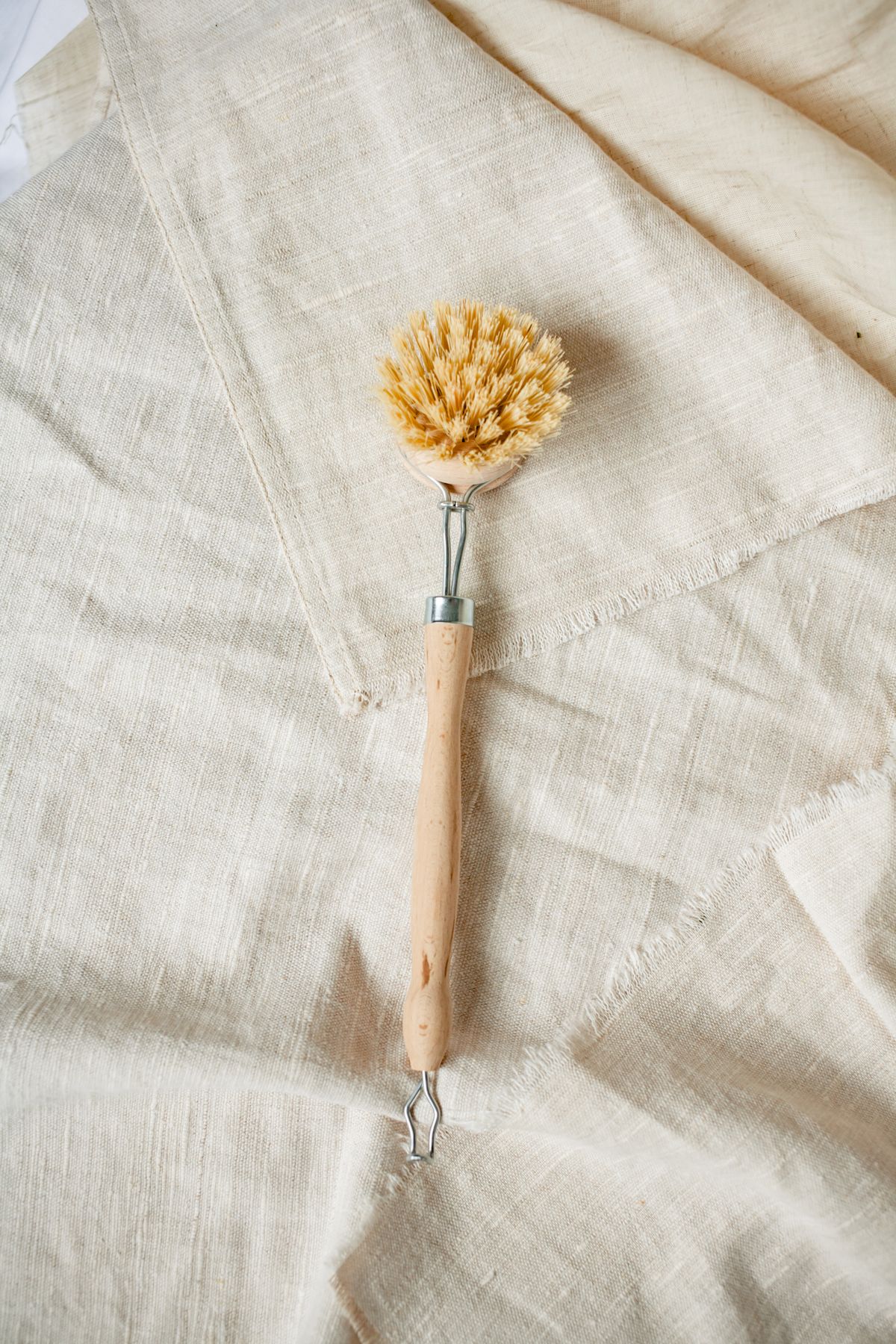
A dish brush can disappear into its holder while rice and sauce remain trapped between the bristles. Its usefulness depends on more than the material advertised on the package. The shape of the head, the drying spot beside the sink, and what happens after the final plate all affect the condition you find next time.
Finish the brush's job too
Remove visible food particles and clean the brush according to its manufacturer's care instructions. A wooden handle may require different treatment from a plastic model specifically labeled dishwasher safe. Do not treat a broad material description as permission for a particular wash cycle.
Rinse so loosened debris can leave the bristle area rather than settle further into it. Look at the joint between the head and handle as well. If the head is replaceable, detach it only as the design allows. Forcing a part loose can damage the connection that needs to hold it securely during use.
Position the brush so water can drain and air can reach the head. A deep, closed cup with standing water at the bottom is a poor drying arrangement. Check the drip tray, too. A tidy-looking brush can still be sitting over an overlooked layer of residue.
Inspect performance, not just appearance
Bristles that are flattened or badly bent may no longer reach the places you expect. If you find yourself pressing harder to do the same job, examine the head before blaming the dish detergent. Check the handle for cracks and the fittings for loose or sharp parts. No fragment should be coming away over the dishes.
A replaceable head is useful only if the replacement is available and fits properly. Keep the model details or packaging information long enough to identify the correct part. Test one replacement before ordering a large supply of heads that only look similar.
Stuck-on residue in a pan may require a different tool approved for that pan's coating. Extra force with the wrong brush is not necessarily the right solution. Keep brushes used for bins, drains, and other household jobs separate from the dish brush, with an obvious place for each one.
A calendar reminder can prompt an inspection, but it cannot judge the condition of the tool. Replace a brush that is damaged, excessively worn, or no longer cleanable. One in sound condition still needs suitable care and a place to dry. Those are the first adjustments to make before buying a more elaborate sink organizer.