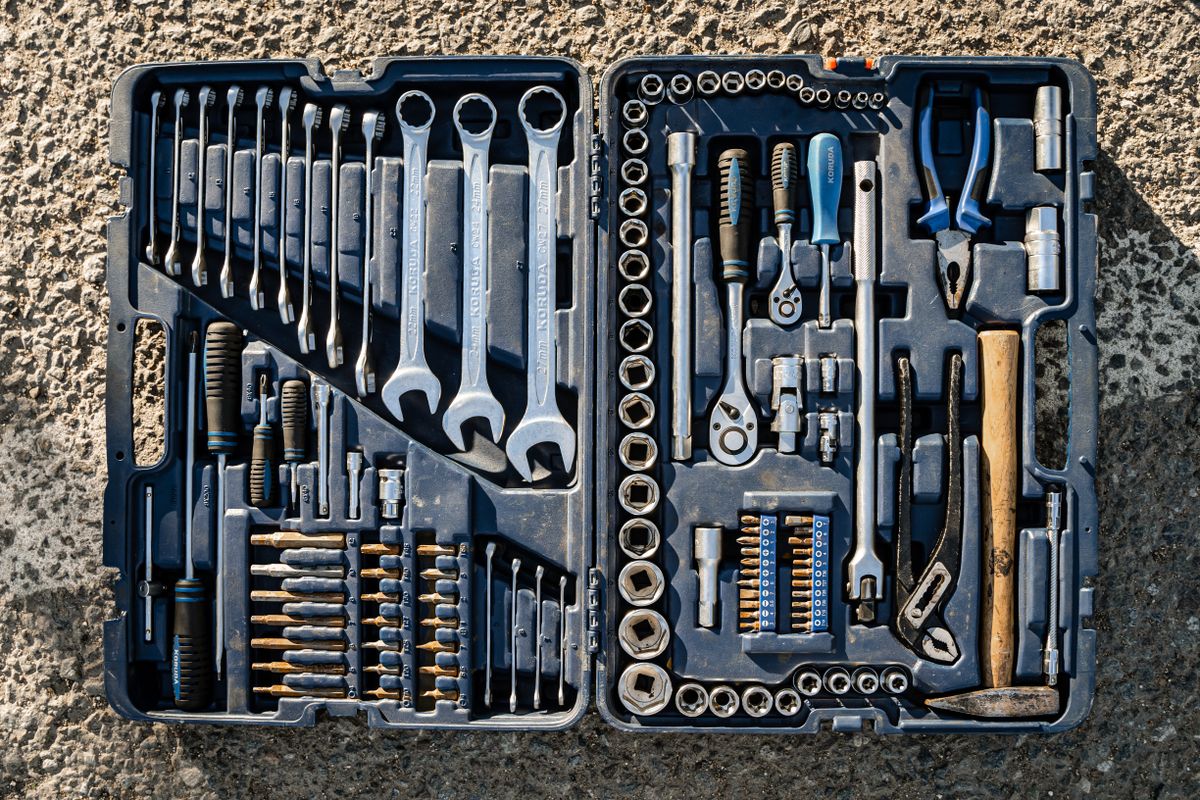
Before buying a tool for one shelf or one garden project, describe the job in enough detail to identify what you actually need. “Make a hole” does not specify the material, fastening, access, or skill involved. A clear description can lead to a more suitable loan and avoid bringing home equipment that does not solve the problem.
Start with the task
Write down the finished result and the steps needed to get there. Decide whether the work is within your competence or calls for qualified help. Having access to a tool does not make an unfamiliar job safe. Work involving hidden utilities, electrical systems, or structural elements requires appropriate assessment before equipment is chosen.
Once the task is clear, ask about the tool, its instructions, and the accessories required. Check that attachments and consumables fit the exact model. Borrowing a sander is not very useful if the necessary abrasive sheets or dust-collection arrangement are missing. Establish which items are included and which ones you must supply.
Borrowing or renting can suit infrequently used equipment; EPA includes tool sharing among ways to reduce unnecessary purchases. The useful comparison, however, is the complete arrangement rather than just a rental price next to a purchase price. Storage, transport, maintenance, and help with operation all affect whether the arrangement works.
Allow time around the actual work
Include pickup, setup, instruction, cleaning, and return in your schedule. If the project depends on weather or another person's availability, account for that before agreeing to a short loan. A deadline that leaves no room for adjustment can put avoidable pressure on the work.
Check the weight and transport requirements. Will the case fit your vehicle? Can you carry it safely? Does a battery-powered tool need its charger as well as the battery? At handoff, review the visible condition and accessories together. A quick shared record makes it easier for both parties to recognize what should come back.
Ask what to do if the tool develops a problem or your schedule changes. Do not pass a borrowed tool to someone else without permission. Follow the provided operating and cleaning instructions; avoid improvised repairs or modifications to equipment you do not own.
Use the project to inform the next decision
Return the tool with its accessories in place and report any concerns directly. Afterward, consider how often the same job is likely to recur. Repeated, predictable use may justify ownership. A one-time project may simply have demonstrated that borrowing works well. Either way, the decision can now be based on an actual task rather than an imagined collection of future projects.