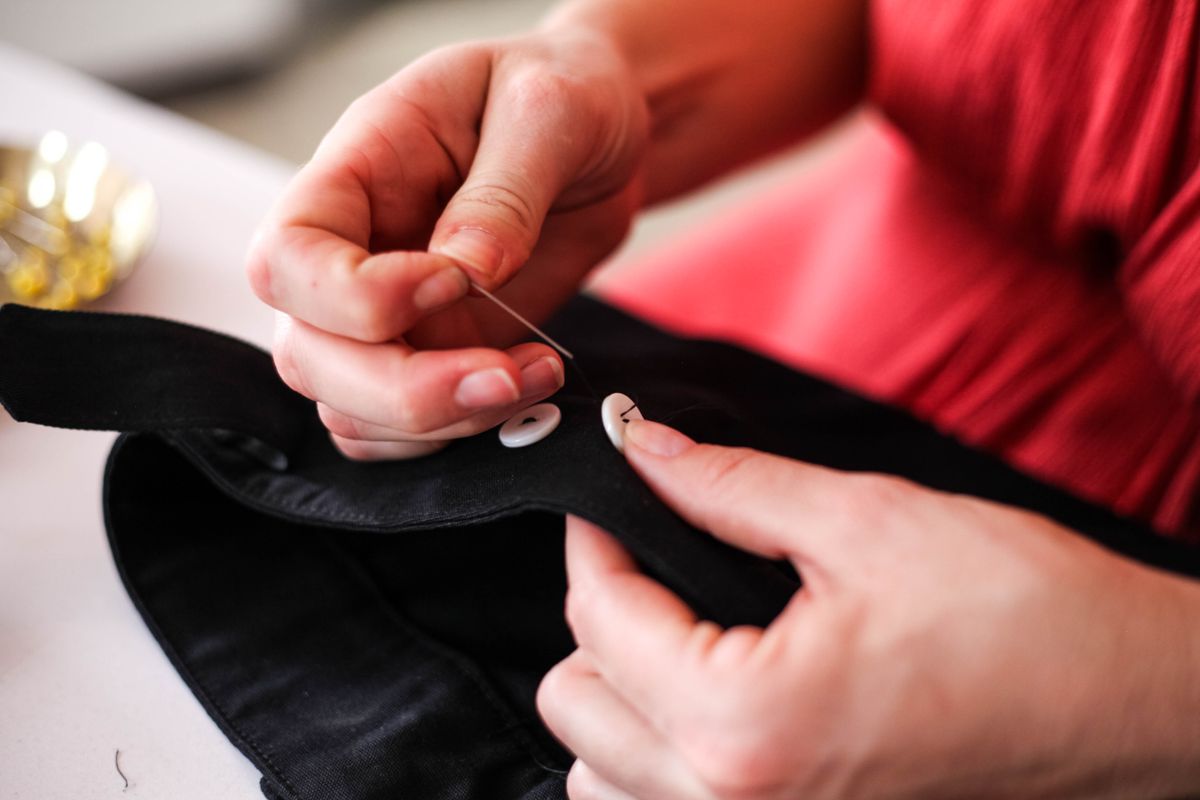
A sticking zipper, a worn base, and a torn shoulder strap are different problems, even when all three bags end up in the same “repair later” pile. Examine one bag at a time and describe what prevents you from using it. That makes it easier to distinguish a cleaning task from a replacement part or a repair requiring appropriate skills.
Empty every pocket and remove loose objects. In good light, inspect the lining, seams, base, handles, and closures. A hole in the lining may trap small items, while a damaged strap may no longer carry a load reliably. Both deserve attention, but they need different solutions. Do not keep loading a visibly damaged strap to discover how much weight it can still hold.
Identify the material before cleaning
Look for care labels or manufacturer guidance. Coated fabric, leather, and washable textiles can look similar while needing different treatment. Machine washing is therefore not a universal first repair step. Begin only with a gentle method suitable for removing loose dirt from the material you have identified.
For a sticking closure, look for visibly trapped fabric and avoid forcing parts apart. Applying oil or glue without understanding the problem can complicate a later repair. Instead, take a close photograph of the affected area and another showing its position on the whole bag. A repair service can use those views to understand the construction and discuss the likely work.
Match replacement parts to their job
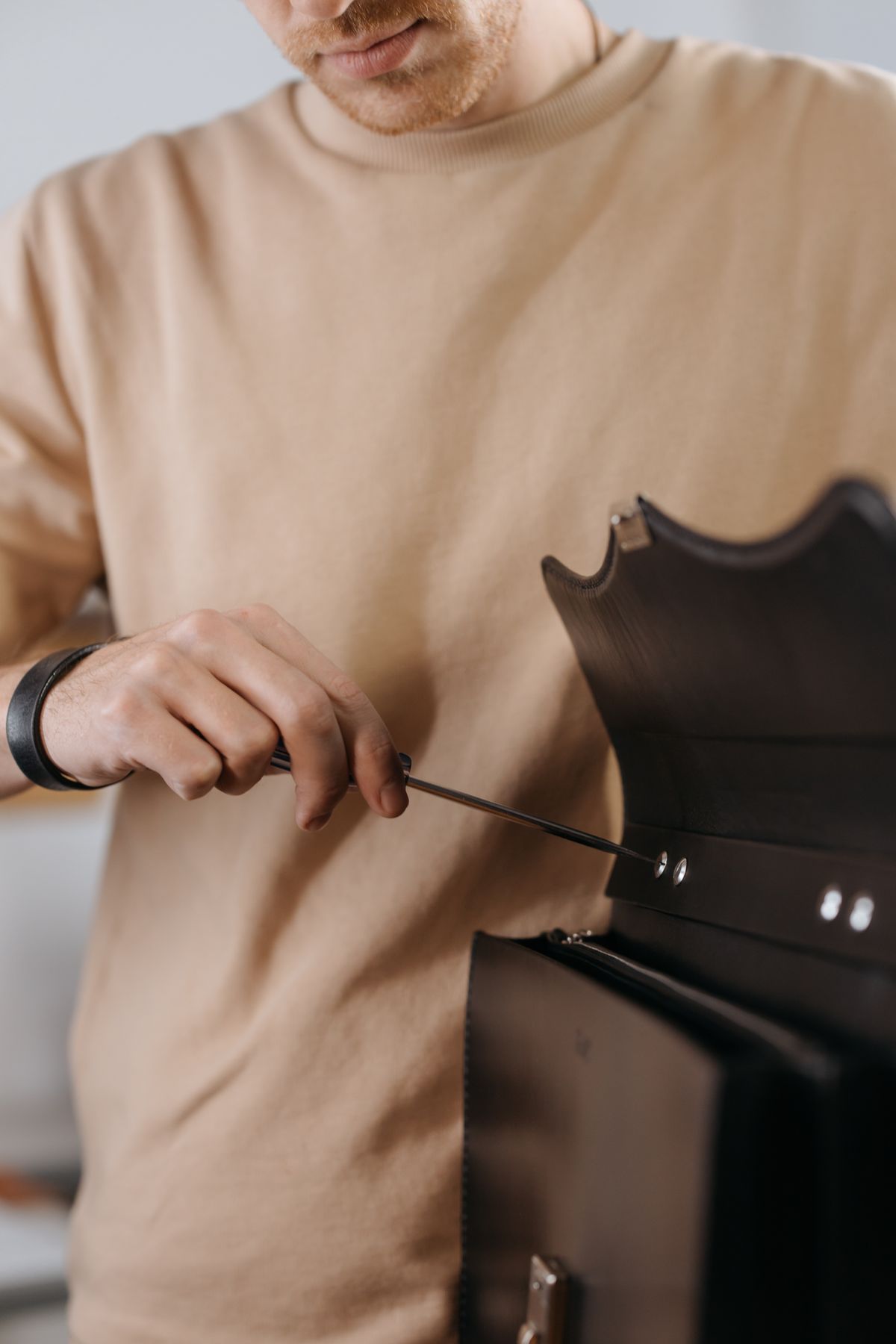
A removable shoulder strap may be replaceable, but attachment style, width, intended load, and the condition of the bag's mounting points all matter. A clip that merely looks similar is not enough. Ask for an original part or an alternative confirmed as suitable. Torn load-bearing seams or damaged attachment areas may need assessment by a repair shop familiar with that type of bag.
Explain how the bag is used when requesting a quote. A lightweight bread bag and a work bag carrying a laptop have different demands. Mention the normal contents and whether a visible repair is acceptable. That lets the repairer discuss the required function and appearance before you commit to the work.
Give the unfinished job a next step
Keep any detached parts with the bag and choose a specific action: request a part, obtain a repair estimate, or arrange an appointment. After repair, check closures and attachments for the intended use before returning to your normal routine. A decorative patch is not evidence that a load-bearing area has been restored. If the bag remains unsuitable, disclose the problem rather than passing it on as fully functional.